The crypto market moves fast. One day traders feel unstoppable. The next day panic spreads across social media. Prices swing hard because emotions drive a large part of the market. Fear and excitement often influence trading decisions more than logic. This is where the crypto fear and greed index becomes useful.
Many traders use this sentiment indicator to understand how the market feels at a specific moment. Instead of guessing whether traders are fearful or overly confident, the index provides a simplified score that reflects overall market psychology.
When fear becomes extreme, investors often sell too quickly. On the other hand, when greed takes over, traders may enter the market late because of hype and FOMO. Smart traders know how to spot these emotional extremes.
In this guide, you will learn how the crypto fear & greed index works, why it matters, and how professional traders use it to improve decision-making in volatile markets.
What Is the Crypto Fear and Greed Index?
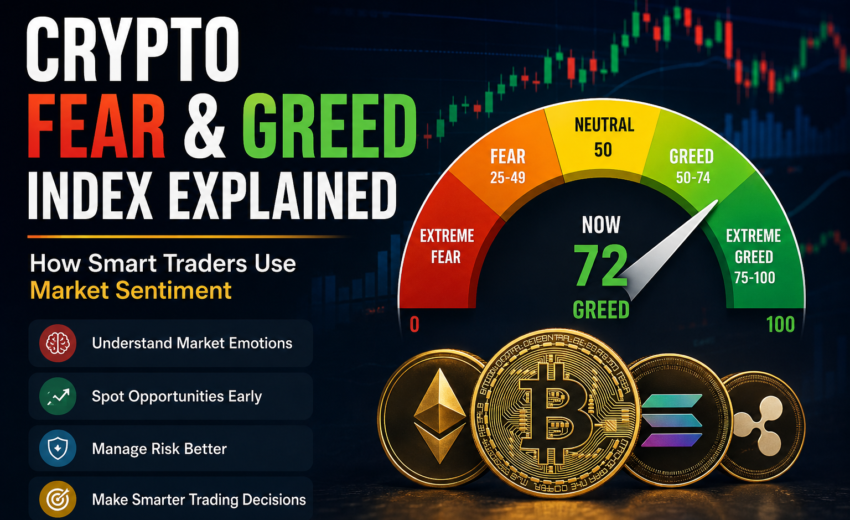
The crypto fear and greed index is a market sentiment tool designed to measure emotional behavior in the cryptocurrency market. It uses a score between 0 and 100 to show whether traders are fearful or greedy.
The idea behind the indicator is simple:
- Extreme fear can signal that investors are worried and selling aggressively
- Extreme greed may suggest that the market is overheated
The scale usually works like this:
| Score | Sentiment |
|---|---|
| 0–24 | Extreme Fear |
| 25–49 | Fear |
| 50–74 | Greed |
| 75–100 | Extreme Greed |
The indicator became popular because crypto markets are heavily driven by emotion. Unlike traditional markets, digital assets react quickly to news, social media trends, and investor psychology.
Many traders watch the index daily because it helps them avoid emotional decisions during volatile periods.
How the Crypto Fear & Greed Index Works
The index collects market data from different sources to calculate a sentiment score. Each factor reflects investor behavior and market conditions.
Volatility
Large price swings usually increase fear in the market. If Bitcoin suddenly drops several percentage points in a short time, panic often spreads among traders.
High volatility can push the index toward fear territory.
Market Momentum and Volume
Strong buying activity often increases greed. When trading volume rises alongside price growth, traders become more optimistic.
Bullish momentum usually pushes the index higher because investors feel confident.
Social Media Sentiment
Crypto discussions on platforms like X and Reddit influence trader psychology. If people constantly post bullish predictions, greed can grow quickly.
Similarly, negative news and panic discussions can increase fear.
Bitcoin Dominance
Bitcoin dominance measures Bitcoin’s share of the total crypto market.
When traders move money into Bitcoin during uncertain conditions, it often signals fear. Investors usually treat Bitcoin as a safer crypto asset compared to smaller altcoins.
Google Trends Data
Search trends also reveal market emotions.
For example:
- Rising searches for “Bitcoin crash” may indicate panic
- Increasing searches for “buy Bitcoin now” often reflect greed
Search behavior provides insight into retail investor sentiment.
Understanding the Fear and Greed Scale
The score itself becomes more useful when traders understand the psychology behind each range.
0–24: Extreme Fear
This stage usually appears during market crashes or strong corrections.
Traders panic. Social media becomes negative. Many investors believe prices will continue falling forever.
Interestingly, experienced investors often view extreme fear as a possible buying opportunity.
The famous investing principle says:
“Be fearful when others are greedy and greedy when others are fearful.”
Extreme fear can sometimes signal undervalued conditions.
25–49: Fear
The market still feels cautious in this zone. Traders hesitate to enter new positions.
However, selling pressure may begin slowing down.
This range often appears during uncertainty or consolidation periods.
50–74: Greed
Confidence returns to the market here.
Prices usually trend upward. Traders become more optimistic. Positive news spreads rapidly across crypto communities.
Greed itself is not always dangerous. Strong bullish trends can continue for weeks or months.
Still, traders should remain cautious.
75–100: Extreme Greed
This is where hype becomes excessive.
Many inexperienced traders enter the market because they fear missing out on profits. Social media influencers often predict unrealistic price targets during this phase.
Extreme greed can sometimes signal a potential market top.
Professional traders usually become more careful when sentiment reaches this level.
Why the Crypto Fear and Greed Index Matters
The crypto market is emotional by nature. Traders often react impulsively during major price movements.
The crypto fear and greed index helps investors stay disciplined.
Helps Control Emotions
Emotional trading destroys many accounts.
Fear causes panic selling. Greed encourages risky buying decisions.
The index acts as a reminder that crowd psychology influences the market heavily.
Identifies Potential Buying Opportunities
Some traders look for buying opportunities during periods of extreme fear.
When panic spreads, assets may become oversold.
Although the market can continue falling, fear zones sometimes provide attractive long-term entries.
Helps Spot Overheated Markets
Extreme greed can warn traders about excessive optimism.
When everyone expects prices to rise forever, risk often increases.
Smart investors may reduce exposure or secure profits during highly euphoric periods.
Improves Risk Management
The index helps traders understand overall market conditions.
During fearful markets:
- Traders may reduce leverage
- Position sizes may become smaller
- Risk management becomes more important
How Professional Traders Use the Crypto Fear and Greed Index
Experienced traders rarely use sentiment indicators alone. Instead, they combine them with technical analysis and market structure.
Combining Sentiment With Technical Analysis
Professional traders often compare sentiment with:
- Support and resistance levels
- Trend direction
- Trading volume
- RSI indicators
For example:
- Extreme fear near strong support may create buying interest
- Extreme greed near resistance may signal caution
Using RSI Alongside Sentiment
The Relative Strength Index helps traders identify overbought or oversold conditions.
When:
- RSI is oversold
- Fear is extreme
- Volume stabilizes
Some traders consider this a stronger buying signal.
Watching Market Structure
Sentiment alone does not predict reversals.
Markets can remain greedy for a long time during bull runs. Similarly, fear can continue during bear markets.
Professionals focus on confirmation before entering trades.
Best Strategies Using the Crypto Fear & Greed Index
Buying During Fear
Many investors use a contrarian approach.
When fear dominates:
- Prices may trade below fair value
- Retail traders panic
- Long-term opportunities can appear
This strategy requires patience and discipline.
Taking Profits During Greed
Greedy markets often create unrealistic expectations.
Some traders gradually secure profits when greed becomes excessive instead of waiting for perfect tops.
This helps protect gains during volatile conditions.
Dollar-Cost Averaging
Dollar-cost averaging reduces emotional pressure.
Instead of trying to perfectly time the market, investors buy regularly over time.
This strategy works especially well during fearful periods.
Combining Sentiment With Trend Trading
Professional traders often align sentiment with broader market trends.
For example:
- Bullish trend + temporary fear = possible dip buying opportunity
- Bearish trend + extreme greed = possible short-term caution
Limitations of the Crypto Fear and Greed Index
Although the indicator is useful, it has weaknesses.
Not a Standalone Indicator
The index should never replace proper analysis.
Sentiment indicators work best when combined with:
- Technical analysis
- Risk management
- Market structure
- Fundamental research
Fear Can Last Longer Than Expected
Many beginners assume extreme fear means prices will instantly recover.
This is not always true.
Markets can remain fearful for weeks during strong downtrends.
News Changes Sentiment Quickly
Crypto reacts rapidly to:
- Regulations
- Exchange news
- Economic events
- ETF developments
- Security breaches
Sentiment can shift dramatically within hours.
Social Media Noise
Online hype often distorts emotions.
Many influencers create exaggerated predictions for attention. Traders should remain cautious and avoid blindly following crowd sentiment.
Crypto Fear and Greed Index vs Traditional Market Sentiment Indicators
Traditional markets also use fear indicators. One famous example is the VIX index in stock trading.
However, crypto markets behave differently.
Crypto Markets Move Faster
Bitcoin and altcoins react much faster emotionally compared to stocks.
Because crypto trades 24/7:
- Sentiment changes constantly
- Volatility becomes stronger
- Emotional reactions intensify
Retail Investors Dominate Crypto
Traditional markets have stronger institutional control.
Crypto markets still contain large numbers of retail traders. This increases emotional behavior and speculative activity.
Social Media Has More Influence
Social platforms heavily impact crypto prices.
A viral post can rapidly change market sentiment within minutes.
This makes the crypto fear & greed index especially valuable for crypto traders.
Common Mistakes Traders Make
Blindly Following the Index
Some traders buy every time fear appears.
This is dangerous.
The indicator should support analysis rather than replace it.
Ignoring Technical Confirmation
Sentiment without confirmation increases risk.
Professional traders wait for:
- Trend confirmation
- Support levels
- Volume strength
- Market structure signals
Trading Based on Hype
Greedy markets create unrealistic expectations.
Many traders buy late because they fear missing profits.
This often leads to poor entries.
Overreacting to Fear
Panic selling usually happens near emotional extremes.
Successful traders learn how to stay calm during volatility.
Expert Tips for Using the Crypto Fear and Greed Index
Wait for Confirmation
Never rely on one indicator alone.
Combine sentiment with:
- Technical setups
- Volume analysis
- Trend direction
Watch Bitcoin Dominance
Bitcoin dominance reveals how investors manage risk.
A sudden rise in dominance may indicate caution across the market.
Avoid Emotional Decisions
The biggest goal of the index is emotional awareness.
Successful traders understand their emotions instead of reacting impulsively.
Use Proper Risk Management
Even strong setups can fail.
Always:
- Use stop losses
- Manage position sizes
- Avoid excessive leverage
Think Long Term
Short-term emotions create noise.
Long-term investors often focus more on market cycles rather than daily sentiment changes.
FAQ Section
What is the crypto fear and greed index?
The crypto fear and greed index measures overall market sentiment using a scale from 0 to 100. It helps traders understand whether investors feel fearful or greedy.
How accurate is the crypto fear & greed index?
The indicator provides useful sentiment insights but should not be used alone. It works best when combined with technical and fundamental analysis.
Is extreme fear bullish for crypto?
Extreme fear can sometimes create buying opportunities because panic selling may push prices lower than fair value. However, markets can remain fearful for long periods.
Can beginners use the crypto fear and greed index?
Yes. Beginners often use it to better understand crypto market psychology and emotional trading behavior.
Which websites track the crypto fear and greed index?
Popular platforms include Alternative.me and several major crypto exchanges and analytics websites.
Is the crypto fear and greed index good for day trading?
Some day traders use it for sentiment awareness. However, short-term traders still rely heavily on price action and technical analysis.
How often does the index update?
Most versions update daily. Some platforms may provide more frequent sentiment updates.
Can the index predict Bitcoin price movements?
No indicator predicts prices perfectly. The index only reflects market sentiment and emotional conditions.
Conclusion
The crypto fear and greed index remains one of the most popular sentiment tools in the cryptocurrency market. It helps traders understand emotional behavior and avoid impulsive decisions during volatile periods.
Fear and greed will always influence crypto prices. Markets often move between panic and excitement faster than many investors expect. This is why emotional awareness matters just as much as technical analysis.
Smart traders use the crypto fear & greed index as part of a larger strategy. They combine sentiment with chart analysis, risk management, and patience.
The goal is not to predict every market move perfectly. The goal is to make better decisions while staying calm during emotional market conditions.
If you want long-term success in crypto trading, learning how to manage emotions may become one of your biggest advantages.

May 7, 2026